Redesigning the onboarding experience to make a complex game learnable
Through five rounds of iterative design, playtesting, and user interviews, we uncovered why players couldn't progress and redesigned the onboarding experience to make a challenging game feel learnable without sacrificing its intended difficulty.
Outcomes
-70%
Onboarding drop-off reduction
90%
Of users completed the presented DEMO
2025
Best game award at EVA’s MPVP contest
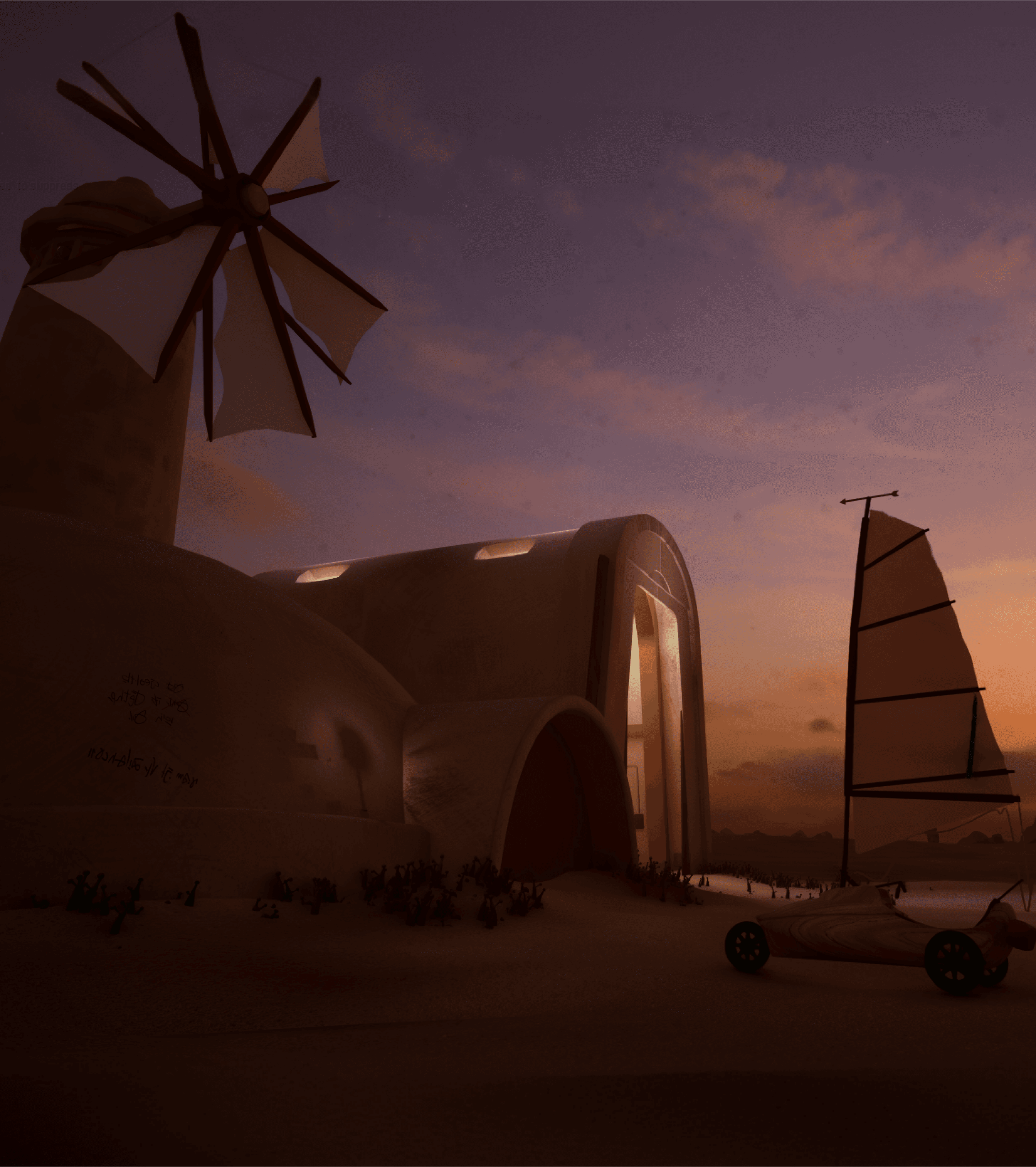
My role
Ux researcher
Ux/Ui Designer
Team
4 people
Tech stack
Deadline
6 Months
Context
Players were abandoning the experience before understanding the game's core mechanics. Our goal was to improve learnability while preserving the strategic depth and immersive nature of the game.
Design process
Research
Benchmarking
JBTD
User Journeys
User Personas
Interviews
Define
Problem statement
User needs
Product / business needs
Desgin principles
Learning curve
Prototype
User flows
Navigation flows
Wireframes for tutorial concepts
Game ready prototypes
Play testing
Moderated usability testing
Think-aloud protocol
Follow-up interviews
Behavior observation
Iteration
Data gathering
Hypothesis after every test round
Iterative design based on feedback
Repeat until objectives are met
Research
Goal
Understand why new players were unable to progress beyond the first minutes of gameplay.
Benchmark
We analyzed games to learn from their navigation systems, core mechanics, engagement and innovation

Sailaway III

Sea of thieves

Raft

Death Stranding

Jusant

Sable
User Interviews
We did desk research and an initial round of interviews to better understand what players were looking for in a game like ours and which elements make a game interesting for them. We wanted to learn how to make our game challenging while keeping engagement and giving our users a good time.
Interviewed
8 people
Looked up forums
Steam & reddit
Tech stack
Meet or Discord calls
Docs for notes
Maze for data
User personas


Core User Journeys & Jobs To Be Done
We mapped out the main user journeys on our game loop and what the players need to do in each one of them
Navigation journey | JTBD
Map a route following the wind
Plan your trip and equipment
Recognize obstacles
Avoid wind occlusion zones
Manage yacht health
Sailing | JTBD
Manage sail tension
Control weight distribution
Apply different maneuvers
Manage speed to avoid crashing
Customization | JTBD
Acquire new parts
Understand stats
Go to workshop
Swap parts adjusting to scenarios
Crafting | JTBD
Collect ingredients
Learn recipes
Craft sub-components
Limited craft outside workshop
Repairs | JTBD
Craft needed pieces
Patch wheels / sails
Playtesting & follow-up interviews
Observed players interacting with the game while completing predefined tasks.
Conducted interviews immediately after each session to understand player reasoning, frustrations and expectations.

Rounds of playtesting
Test & Experiment
Tested & interviewed
30 people
Tech stack
Unreal Engine
Figma
Meet or Discord calls
Docs for notes
Definition
Problem Statement
New players were expected to learn multiple complex systems simultaneously without enough guidance, resulting in confusion, frustration and early abandonment due toe cognitive overload.
Design principles
Progressive Learning
Introduce mechanics one at a time.
Preserve Challenge
Make the game easier to learn, not easy per se.
Maintain Immersion
Avoid breaking the player's engagement with intrusive tutorials.
Learn Through Play
Teach mechanics by doing rather than explaining.
Design Hypothesis
If we separate mechanical execution from strategic navigation and introduce mechanics progressively, players will understand the game faster while maintaining its intended level of challenge.
Testing and iterative design
Objective
Understand how our users prefer to learn new mechanics in a video-game and which method works best for our product
Usability test methodology
Each session had a specific objective
Tests were moderated
Think-Aloud protocol
Semi-structured interviews before and after the test
Behavior observation
Data analysis and validation before moving on
Iterative Design
Over five rounds of playtesting and interviews, we designed six onboarding versions. We started with a baseline and learned exactly how our users prefer to acquire new skills.
Minimizing cognitive load while combining sensory signals proved to be the key to our success.
Ideation
Design Exploration
Explored multiple onboarding approaches before selecting the final solution.
Play testing rounds
Balancing User Needs & Product Vision
User needs
Have a good time
Sense of progression
Experimentation and freedom
Sense of joy
Grow into the experience
Learn easily
Feel progression
Understand context
Perceive changes
Recognize goals
Receive feedback
Build confidence
Sense of mastery
Sense of control
Game vision
Reach a broad audience
Create experiences for casuals and hardcore gamers
Preserve difficulty
Challenge players on solving complex puzzles
Keep a realistic navigation
World experience
Allow for world exploration
Create an immersive experience through artwork, music and UI
Reward player mastery
Allow for dedicated players to get the most out of the experience
Key Design Decisions
These were the most relevant changes that led us closer to our goals
Semi-Automatic controls for vehicle
Reduced unnecessary mechanical complexity while preserving strategic decision-making. More experienced players can opt for a full manual controls to have a greater challenge
After second test
Progressive Onboarding
Introduced mechanics one at a time with missions and challenges. I.E “Reach point A using Broad reach”
After second test
NPC Tutorial
Delivered guidance naturally without interrupting immersion and integrating the onboard/tutorial experience into the playable demo.
After fourth test
UI Improvements
Improved user’s understanding of the world with diegetic and non-diegetic elements.
Improved wind visualization
Improved feedback signals
Improved visual hierarchy for HUD
1st test
Final Outcome
-70%
Onboarding drop-off reduction
90%
Of users completed the presented DEMO
2025
Best game award at EVA’s MPVP contest
Reflections & learnings